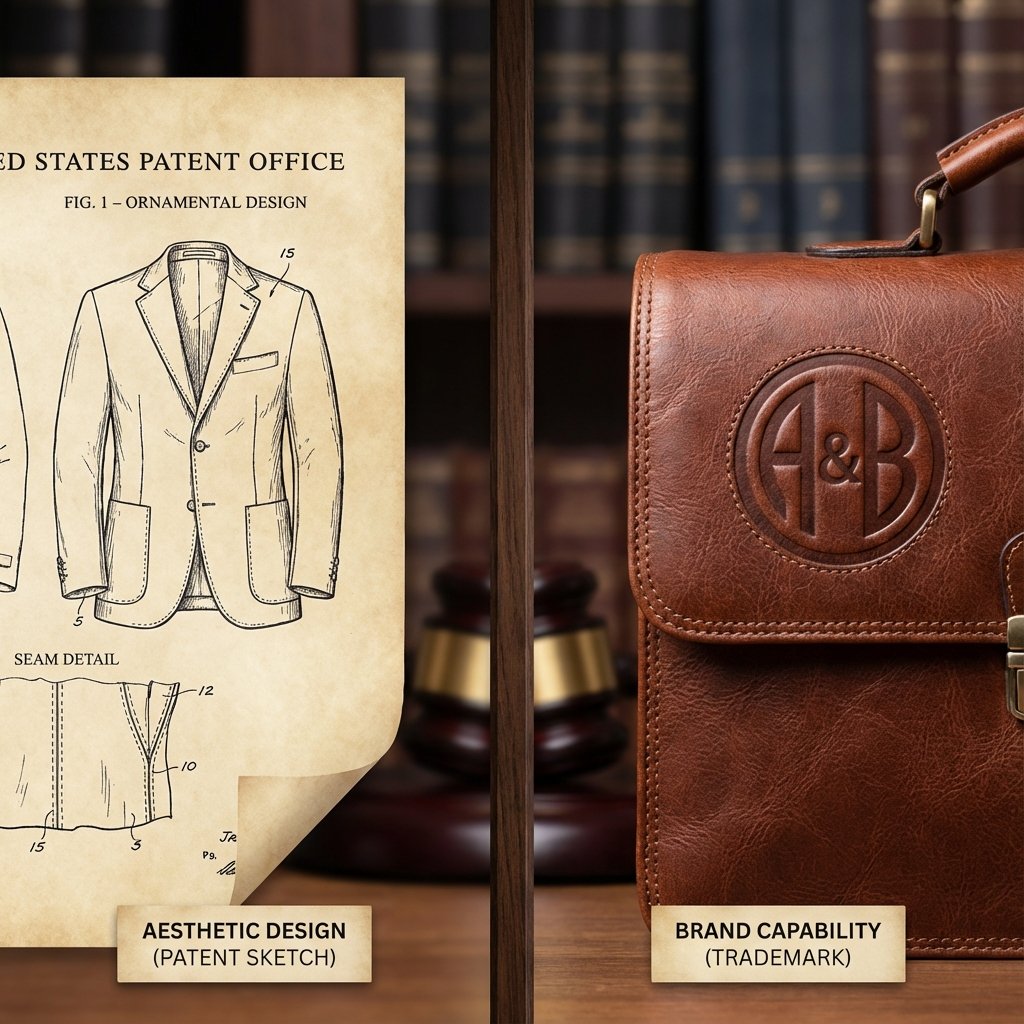
Fashion law is unique because clothes are considered "utilitarian items" (like toasters or chairs). In the US, you generally cannot copyright a piece of clothing. This is why Fast Fashion is legal.
However, there are three specific lines you cannot cross.
1. Copyright (Prints and Graphics)
While you can copy the shape of a t-shirt, you cannot copy the artwork printed on it.
- Allowed: Copying the cut of a Supreme hoodie.
- Illegal: Copying the graphic printed on the chest.
The Rule: If the art can be "conceptually separated" from the garment (like a print), it is protected.
2. Trademark (Logos and Branding)
Trademarks protect the source identifier. This is the strongest protection in fashion.
- Nike Swoosh: Trademark.
- Levi's Back Pocket Stitching: Trademark.
- Burberry Check Pattern: Trademark.
The Danger: If you copy a plaid pattern that looks too much like the Burberry check, you aren't copying a design; you are counterfeiting a trademark. This carries criminal penalties, not just civil ones.
3. Design Patents (The Rare Exception)
Some brands apply for Design Patents on specific items (e.g., the shape of Crocs, or Oakley sunglasses). These last for 15 years and protect the ornamental design of a functional item.
Why it matters: Most clothes are not patented because fashion moves too fast and patents take too long (1-2 years) to approve. But for footwear and accessories (handbags, eyewear), patents are common. Never copy a shoe sole without checking patent databases.
The "Knockoff" vs. "Counterfeit" Distinction
- Knockoff: A cheap imitation that copies the style but doesn't claim to be the original. (Usually Legal, but risky).
- Counterfeit: An imitation that uses the brand's logo or trademark to trick consumers. (Always Illegal).
Conclusion
If you are a private label brand, you can often take "inspiration" from the runway. But you must strip away every element that identifies the source:
- Remove the Logo.
- Change the Print.
- Ensure the "Trade Dress" (unique shape) is generic enough.
When in doubt, hire an IP lawyer, not just a sourcing agent.